All posts by admin

3 Tips to Get Your Dock Ready for Spring & Summer

Get ready to get back on the water! While we are currently in the middle of an extreme cold period with about a foot of snow in Indiana, we’re also about a month and a half away from Spring. No more cold weather! This means it is time to get all marine equipment ready for the upcoming season. Those that don’t prepare well will be sorry. If a piece of equipment got damaged by winter weather, ill-prepared waterfront owners will be stuck waiting to get on the water. And once dock company’s schedules start to get full it can take weeks to get something repaired. Today we’ll look at what to inspect to make sure your waterfront will be good to go in Spring.

How to Get Your Dock Ready for Boating Season

1. Inspecting Your Dock

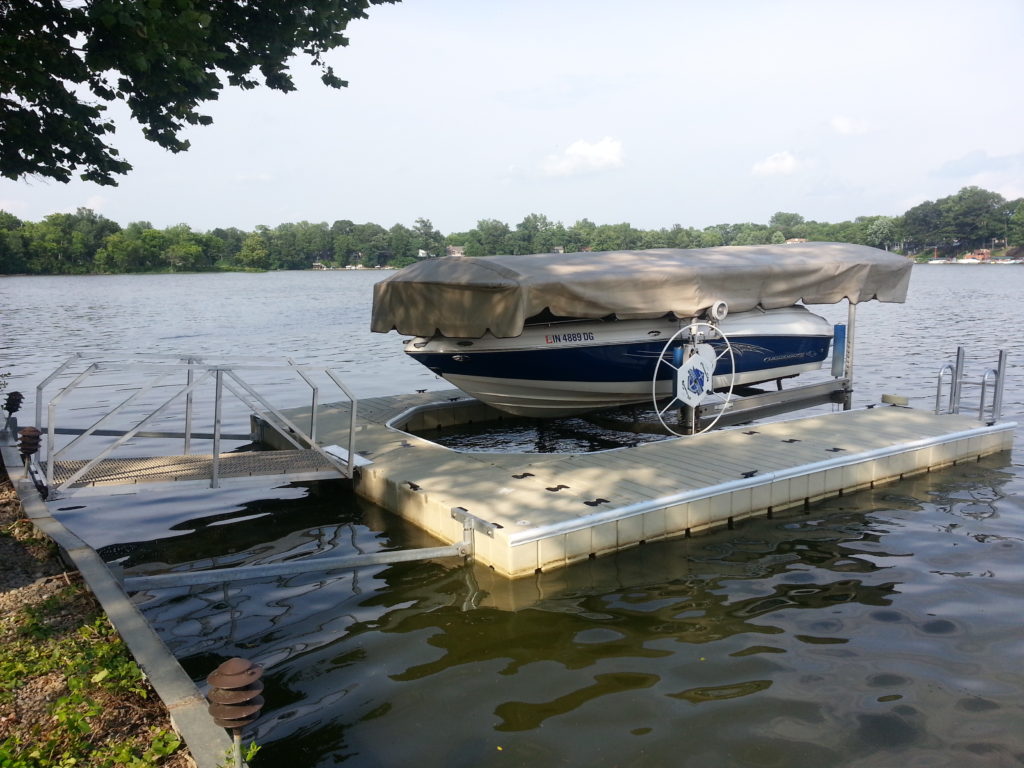
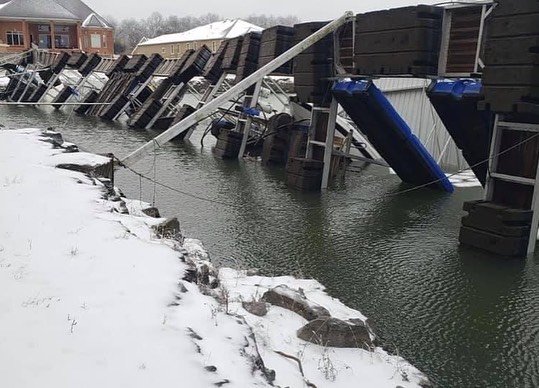
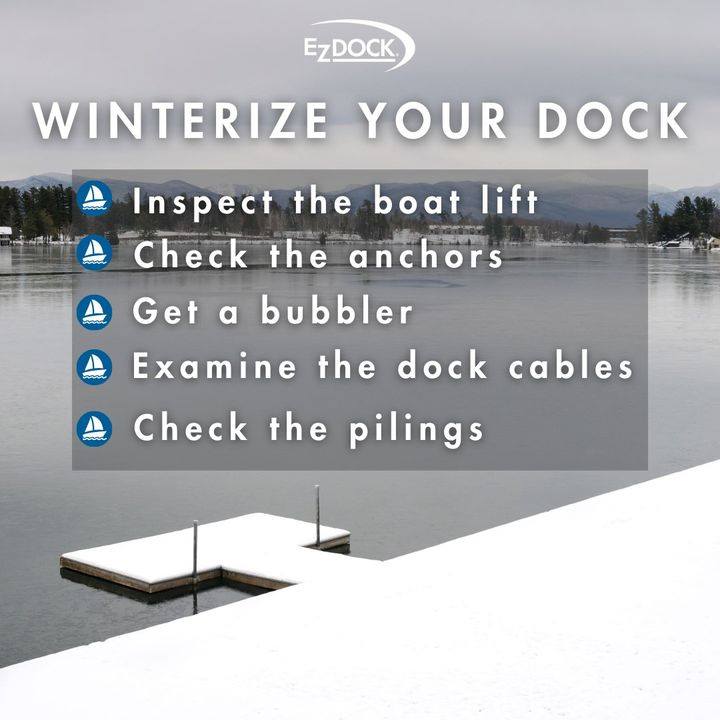
Winter is harsh on docks. Snow and ice aren’t like rain in the summer that just drips right off, they pile on top and stay for a long time. So after sitting on top of a dock for several days or weeks, the weather starts to cause damage. So the first thing we should inspect when the weather is nice enough is the dock. First, inspect the decking. Make sure the material looks just as good as before with no rotting, splintering, cracks, or warps. Once you’ve noted the condition of the decking, move onto checking the frames. Look underneath your decking and make sure the frames aren’t warped or rusted. Make sure you notice if your dock is looking like it is sitting in the water lower than usual. It could be the entire system, or just one finger sitting a little low. If that’s the case, then the floats are damaged. Finally, inspect the anchoring and make sure it isn’t rusted or broken.

Now if you noticed any damage, it’s time to make sure to get it fixed now before the season starts. Fixing damaged decking, floats, or anchoring are small problems that can be fixed if caught early. These are all repairs that can be expensive of up to a few thousand dollars, but it’s nothing compared to spending tens of thousands on a brand new dock.  If the frames become severely warped or rust and break, then you’ll unfortunately probably have to replace the entire dock. Having an idea of what the damage on your dock is before you call in can help put your nerves at ease rather than waiting on a diagnosis.

2. Examining Your Boat Lift

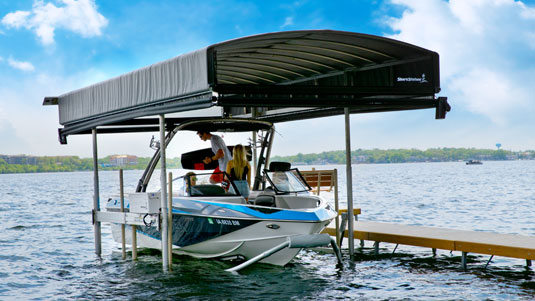
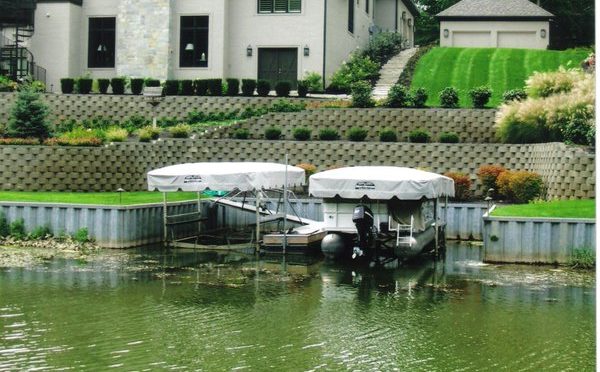
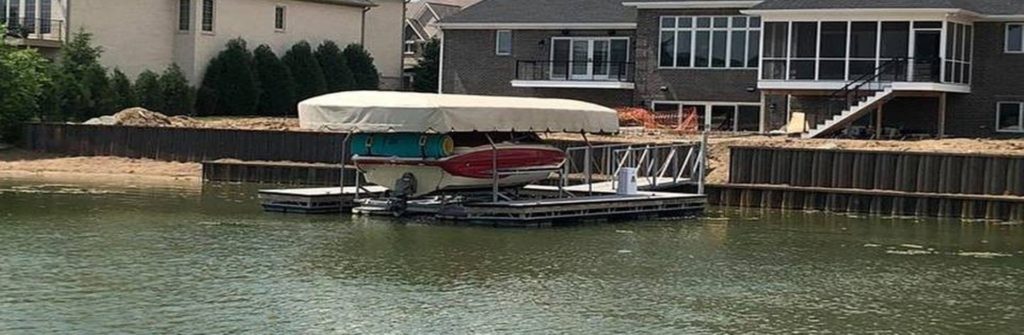
Snow isn’t a real issue on boat lifts, but ice is. Instead of worrying about warping and cracking, you’ll need to worry if the lift is operational. Before we begin, always check your owner’s manual to see proper winterization techniques recommended from your manufacturer. There a lot of things that can get damaged during the winter on a boat lift. You could find damaged bolts, winches, power units, cables, bunks, or guides. After visually inspecting for wear and tear on any of these parts, it’s a good idea to cycle your lift up and down to make sure it’s working as intended. If you have a cable lift, be sure to listen closely and make sure you hear no snapping or noises coming from the cables. Unfortunately you can’t really replace a cable until it breaks, but it’s good to know it is coming rather than be surprised. For hydraulic lift owners, check your fluid and make it is filled to the appropriate level recommended by your manufacturer. Most issues and repairs needed for lifts will have to be dealt with by an expert. Fortunately, there are many experts with several years of experience at Deaton’s Waterfront Services.

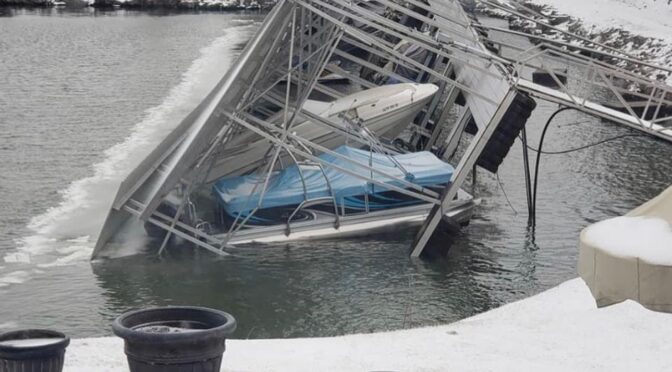
Another aspect of getting your lift ready for the season is the canopy. Lift owners know to remove their canopy and store it for the winter to prevent tearing over the winter. If you leave a canopy on during the winter, snow is going to pile on top of it and destroy it. Call your local lift dealer and schedule them to store and reinstall your canopy every winter and fall. It will save you from having to replace a vinyl each season due to poor care.

3. Checking Your Seawall

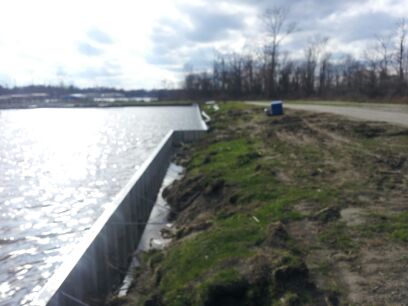
The last piece of equipment you need to inspect is your seawall. Snow and ice will also warp and abuse a seawall during the winter. As water freezes and forms a layer of ice, it will push up against a seawall and try to morph it. As the sun appears during the day, it will cause the ice to start to melt and crack. The problem is, at night it will all refreeze and beat against the seawall. This constant cycle will damage the seawall over time and cause it to crack, warp, have gaps, and leak. If a seawall is well made with the right material, it will last for many decades but unfortunately you can never predict when nature will decide to ruin those plans. Inspecting the wall is simple, just walk along and inspect for warped metal, gaps, or leaks. If you notice a problem it will need to be fixed immediately before more damage piles up.

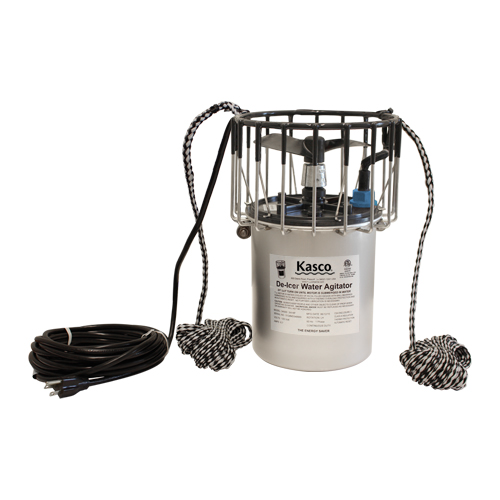
There is a way to help combat the damage that ice can throw at a seawall. If you own a bubbler, it will circulate the water throughout the winter never giving it a chance to settle and freeze. This will help protect anything you may have in the water including a dock, lift, or seawall. It is also helpful in the summer time to get rid of debris such as stray logs.

Final Thoughts To Get Rid of Winter

Getting your equipment working with plenty of time to get your boat prepared for the season is the best thing you can do for your future self and your property. While having damaged equipment will not only drive your property value down until it’s fixed, it also sucks to see everyone out on the water having a blast while you’re not able to. It’s best advised to have your equipment inspected by a waterfront professional sometime in the fall to give yourself plenty of time.  Once the schedule fills up for manufacturers and waterfront service shops, it can take weeks or months to get you a new part or get your equipment fixed. So make sure to see if your equipment will need a repair immediately to make sure you can be out there having fun with everyone else. If you feel more comfortable having an expert inspect your dock, feel free to reach out to us here at Deaton’s Waterfront Services. We will send a team out to inspect your equipment for a free quote. As always, feel free to contact us or give us a call at (317) 747-4933.

Fun Things to Do at Strawtown’s Koteewi Park

There are many great parks and lakes located in the Midwest to experience a fun day on the water. You don’t have to travel far or own a dock to be able to experience the joys and activities that are had on the water.  While many experienced water enthusiasts know exactly where to go to get on the water, there are many people that are uninformed about the lakes in their community. Today we are going to be looking at a park located in Central Indiana, Strawtown’s Koteewi Park.

About Koteewi Park

Koteewi Park is located in Strawtown, just outside of Noblesville in Hamilton County, Indiana. The park is located off State Road 37 and Strawtown Avenue. There are many activities and amenities to experience while at the park including: archery, horse riding, sky trails, snow tubes, and a natural history center. For more information about the park and all the activities offered, check out their website here for directions and park info. The park also offers several waterfront activities, which we’ll look at next.

How to Experience Fun on the Water at Koteewi Park

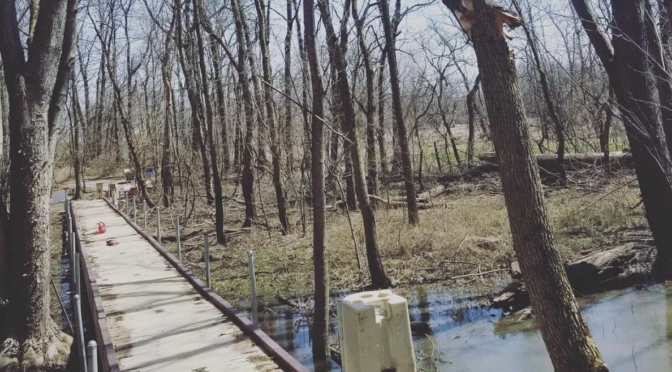
There are a few different ways to experience the water at Koteewi Park. They offer (3) different styles of EZ Dock products. There’s an EZ Trail, a boat dock, and an EZ Kayak Launch. This allows someone wanting to experience fun on the water the chance to do so at little to no cost. The park allows users to fish, launch their boat, and even explore a trail across a natural wetland. For anyone wanting to experience a relaxing, low-cost day on the water, this is a great place to be!

Finding a spot to get out on the water isn’t always easy. Most travel blogs just want to give out basic information, and not let everyone know the truly great areas that have beautiful lakes and ponds to visit. Fortunately, we here at Deaton’s Waterfront Service are here to pay it forward! We want to get as many people out on the water and forgetting about the stresses of life as possible. If you’re interested in creating a new dock to experience the waterfront, feel free to reach out to us or give us a call at (317) 747-4933.

Things To Keep In Mind When Buying a Waterfront Home

Buying a home on the water is a great investment that will provide great views and hours of fun. However, the process of finding the perfect property is difficult. There are several factors to consider when inspecting a waterfront home. You need to make sure that the waterfront is in good condition, and will fit your needs. Real estate agents have no problem selling someone barely passable marine equipment to make a quick buck. Today we’ll look at a few things to keep in mind to make sure that you aren’t getting duped into buying a home that isn’t the right fit.

Waterfront Home

Factors to Consider When Inspecting A Waterfront Home

The Water

When buying a home on the water, you’ll first want to make sure that you’d like to live on the lake you’re looking at. You’ll want to make sure the water quality is good, the traffic isn’t too crazy, and check to see what the water levels typically are at every year. This step requires the most research but it’s important to see if you are the right fit for the lake community. In housing divisions and coves, it’s a good idea to watch the traffic of the lake during the evening hours. If there’s a lot of boat traffic, it’ll prevent you from having a peaceful evening if that’s what you seek.

To make sure the water is up to your standard, don’t be afraid to take a quick dip to decide. If the water stinks, is very murky, and full of algae you probably wouldn’t to live there. Obviously it’s a lot easier said than done to find the perfect lake, but patience is always key. The main takeaway you’ll need to see no matter the quality of water is the depth. Make sure your water is deep enough for boats to drive through. This is usually around 5′ – 8′. If the water is too shallow you won’t be able to own a dock or boat lift.

The Dock

The main reason someone would want to pay a premium to live on the water is because they want to get out and enjoy it. Part of that equation requires a boat dock, which needs to be in good condition or you’ll spend thousands more to replace it. When looking into a waterfront property, make sure to inspect the dock. Look at the decking, frames, and floats. If the decking is starting to warp, wood is starting to splinter, or nails are sticking out, then the decking will need replaced. Floats are also going to need replaced if they are barely holding a dock above water. Having to replace the decking or re-float the dock is the thing you’ll have to worry the least about as they are small repairs. If the frames are rusted, you’ll need to replace the dock entirely.

The whole point is to make sure you’re not spending hundreds of thousands of dollars on a house to have to spend thousands more to get on the water. If you find a great house but inspect to see that it has a terrible dock, the price should reflect that. It shouldn’t be the same price as a fully operational waterfront.

The Seawall

The final factor to consider when buying a waterfront home is the shoreline. Over time, water will erode sand and dirt away causing a shoreline to recede. This might not sound like a big problem, but losing land on your property is going to hurt your investment. To help protect your investment, check if the property you are looking at has a seawall. If it does, make sure that the wall is in good condition by looking for gaps or warps. You obviously don’t want to pay full price for a property if the seawall is going to need replaced. There is another form of protection that is cheaper and more natural, rip-rap. By placing stone down along the shoreline, it provides an extra layer of protection to prevent erosion. So if you don’t see a wall but do see a layer of rock, you’ll be OK. For more information about shoreline protection, check out our page here.

Buying a home on the water is a difficult process that you need to be prepared for. If there are times when you feel overwhelmed during the process, just think about the beautiful payoff on the water. Make sure that everything on the property is in working order and in good condition. If you need any equipment inspected, our expert team will do so free of charge and recommend a plan to restore working condition. Feel free to contact us for a free quote, or give us a call at (317) 747-4933.

Winter Waterfront Management: The Ultimate Guide

Winter is upon us and the lakes are frozen. Dock owners that have experience with the winter season are already well prepared and have their equipment safe. But what if you’re a new dock owner coming into your first winter? There is a lot of work to be down to protect your dock, boat, and PWCs. Today we’ll look at the steps needed to protect your investment and keep it as new as the last time you used it.

Winter Effects On Docks

During the winter, snow will accumulate on top of a dock and the water around it will freeze.  This will cause a lot of problems with a dock and other water equipment. Wood on a dock will warp over time from expanding and contracting with the different temperatures. Steel will rust and corrode over time, causing frames to break and cables to snap. All of these problems are going to happen over time whether your take proper steps for winterizing or not. Winterizing your dock is a matter of delaying the inevitable, it all comes down to keeping your annual maintenance costs down low.

If you live in Indiana, or any of the other surrounding states, you’re probably wondering what you should do with your dock in the winter. Our recommendation is to first check with your local waterfront experts by giving us a call for a free consultation. Our advice is better than just going with your gut instinct. However, it’s not hard to determine your best course of action for the winter. Here are some step’s we take to help ensure docks are kept in great condition throughout the winter:

Protect Your Shoreline From Erosion

One thing that gets overlooked when preparing for winter is your shoreline. Ice and snow will melt causing your shoreline to erode over time, so having a barrier will offer a method of preventing erosion. You can either install a seawall or lay down riprap to protect your property.  For more information about shoreline protection, be sure to check out our seawall page here.

Removing a Floating Dock During Winter

A common step for protecting your dock in the winter is to remove it if you have the means to do so. Fixed docks aren’t able to be removed, but they should never be installed in a lake that freezes in the first place because ice and snow can push pilings apart causing frames to warp. So if you own a floating dock, you can schedule your dock to be removed with Deaton’s or do so yourself. It’s recommended to store dock in a dry, flat surface. They can also be stored outside, but make sure you have tarped them off properly to prevent any water from reaching them. It’s a difficult process but it will pay off by preventing unnecessary damage.

Most modern docks won’t need to be removed due to the changes in dock manufacturing over the years. Instead of being all wood based or steel, materials such as composite decking or hot dipped galvanized frames hold up way better under duress. So if your dock is newer, or you own an EZ Dock system, don’t worry about removing your dock. Around the central Indiana region, it’s pretty uncommon to remove your dock for the winter if you live near the lake.

Preventing Ice with a Bubbler

Perhaps the easiest method of protecting your equipment during winter is to install a bubbler under your dock. A bubbler will push warm water underneath your dock up to the surface causing ice and snow to melt and preventing future accumulation.  It will keep everything nice and thawed! Ice won’t be able to form underneath your dock around the floats. A bubbler will protect your frames and keep your dock in the water where it’s supposed to be. There are different levels of power to bubblers to give them a larger circulation radius. For more information about bubblers, check out Kasco’s line here.

If you’re in need of maintenance on your dock due to winter damage, we’re here to help. Our expert team will diagnose any problems and recommend how to repair your equipment to as good as new! For more information, feel free to request a quote or give us a call at (317)747-4933.

Boathouses 101: Why You Should Aim for the Very Best

If you own property on the water, you probably want the best marine equipment to help increase your property’s value and keep your boat safe and secure. While having a boat dock and lift will certainly increase the value of your home and keep your boat safe, it isn’t the best method of protection. The best style of dock you can own to increase your waterfront value is a boathouse.

Why You Should Buy A Boathouse

There are two main reasons to own a boathouse: they keep your boat safe and secure and they increase the value of your waterfront. A boathouse is usually a house built on top of a dock with a built-in boat lift. They are much more secure than a standard boat lift due to the coverings all around the boat protecting it from weather damage. Boathouses will increase the value of your waterfront property by adding more visual appeal and amenities.

Boathouses: Keeping Your Boat Safe and Secure

A boathouse is for a true water enthusiast. It is meant for someone that is going to be spending a lot of time out on the water, and needs a place to house their boat for safety and storage.  A big reason to build a boathouse is to save on slip rental fees and boat storage fees during the winter. Once you’re able to store your boat inside in a dry environment, you won’t have very many worries about your the safety and storage of it.

Increasing the Value of Your Property with a Boathouse

Owning a boathouse is more than just owning a covered slip, a boathouse is it’s own house on the water!  While a boathouse is more expensive than a dock, it’s an investment that will eventually pay itself off.  You can stylize your boathouse to match the style of your home to make a beautiful waterfront property. They can be equipped with a bar, kitchen, entertainment, or even living quarters. Once you’ve stepped inside one, you’ll realize why everyone wishes that had switched from a dock to a boathouse sooner!

If you’re interested in building a new boathouse, feel free to contact us or give us a call at (317) 747-4933. Our expert team will work with you to determine your needs to design the best boathouse possible. As always, stay safe on the water!

The ADA Kayak Launch: Getting More People on the Water

Living near a public or community dock is a great way for people who love the water to be able to get out and access it. It’s a great source of fun and entertainment that should be able to be enjoyed by everyone. However, if a dock isn’t compliant with the Americans with Disabilities Act (ADA) standards then a large portion of people aren’t going to be able to access the water with your dock. Making sure your dock follows all the guidelines set by the ADA will ensure that everyone can have fun out on the water.

Safely Getting on the Water with an ADA Kayak Launch

Among the many popular water activities, kayaking keeps increasing in popularity.  Many public parks and summer camps see this increase in kayaking popularity, and in turn they would like to increase the kayaking traffic on their water. While most able-bodied people can safely get into a kayak, there’s always a risk of falling into the water if the kayak isn’t supported.

Fortunately, there’s a solution available for everyone! With the EZ Launch system from EZ Dock, people of all body function are able to safely launch in and out of the water without every worrying about getting wet. The EZ Launch system provides a stable platform for people to place their kayak, and it comes with an ADA certified transfer bench station to safely transfer in and out of the vessel. This provides everyone an opportunity to safely and securely access the water. An EZ Launch system is a great investment because it will increase traffic for your park or waterfront.

If you’re interested in an ADA accessible kayak launch system, Deaton’s Waterfront Services is here to help! We specialize in making sure our docks meet all ADA guidelines to help get everyone on the water. For more information, reach out to us to request a free quote, or give our office a call at (317)747-4933. Our team of experts will work with you to design the dock that perfectly fits all your needs.


How to Prepare Your Floating Dock for Winter

Winter time is almost upon us once again, which means that now is the time to prepare for it. During this down period where your dock isn’t getting as much activity as it would in the summer is the best time to inspect your dock and marine equipment and make sure any repairs get taken care of. This process may take about an hour, but it is worth it before something expensive breaks. While stationary docks aren’t usually in an area where they require winter maintenance, floating docks usually are. The best time to prepare your floating dock for winter is during the season where it is not used. Today, we’ll go over the things to look for to get you ready to winterize your floating dock.

Preparing Your Floating Dock For Winter

Checking the Anchoring

The first thing that you’ll want to check on your dock is the anchoring. You want to make sure your anchoring is still secure and in place. First, check your anchoring to see if there has been any movement. If there has been, you’ll want to contact your local waterfront expert to get it fixed and secure right away, or else you could walk out one day and wonder where your dock went.

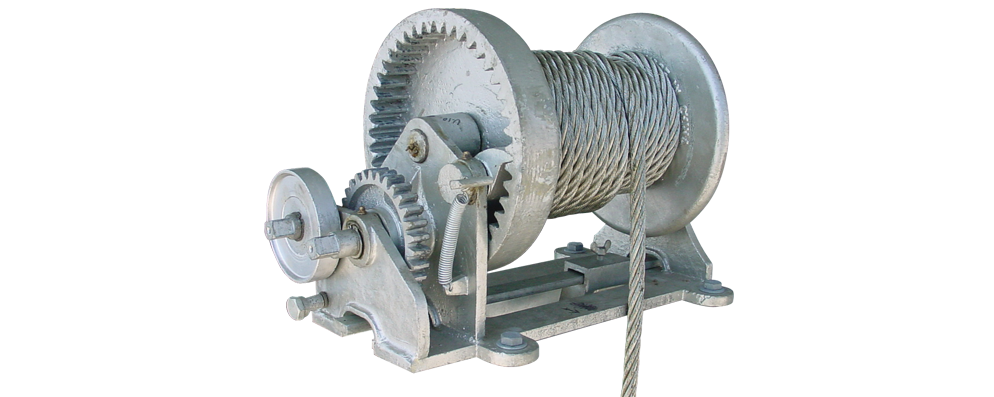
Picture of Winch

If your dock is anchored by a cable system, you’ll want to check the cables to see if any are frayed. Check to also make sure that all clamps are still attached and secure. Inspect your winch to ensure that the toggle pin is still locking and can hold your winch in place. Grease all the gears to make sure they don’t rust over the winter. You’ll also want to give your anchors a little bit of slack to account for changing water levels from fall to spring.

If your dock is anchored by pipe or pilings, first check to make sure all the brackets and fittings are still secure. With pilings, make sure to check the piling hoop along with collar attached to the dock. If you have PVC covers, check to make sure they aren’t getting cracked, as they are cheap and easy to replace.

Inspecting Your Floating Dock

After ensuring the anchoring system is still in good condition, it’s time to inspect the dock. Walk around the perimeter of your dock and inspect the frames. Make sure there is no broken weld spots, loose bolts, or rust. If you find anything broken, make sure to arrange to get it repaired immediately.

The last thing you’ll need to worry about is your gangway. Make sure the pins are still secure in place and haven’t shown any signs of movement. Also check your hinges to see if they have shown any symptoms of loosening.

Get Ready for Winter Maintenance with Deaton’s

Getting your dock ready for the winter is a stressful process due to the amount of work it involves. Fortunately, the expert waterfront team here at Deaton’s Waterfront Services are here to help! If you are in the process of getting your dock ready for winter and aren’t sure what to do, feel free to contact us or give our office a call at (317) 747-4933. We are able to come out, inspect docks, and offer recommendations for getting your winterized. As always, stay safe!


Can RipRap Help My Waterfront Property?

What is RipRap?

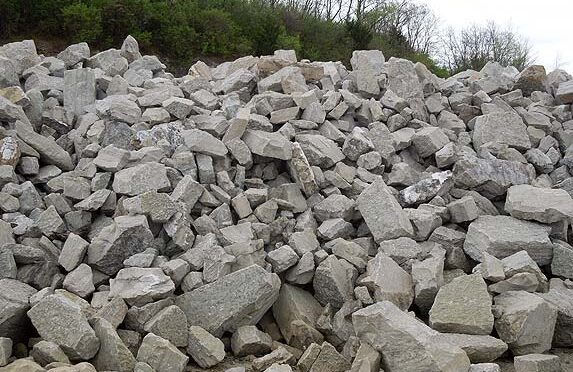
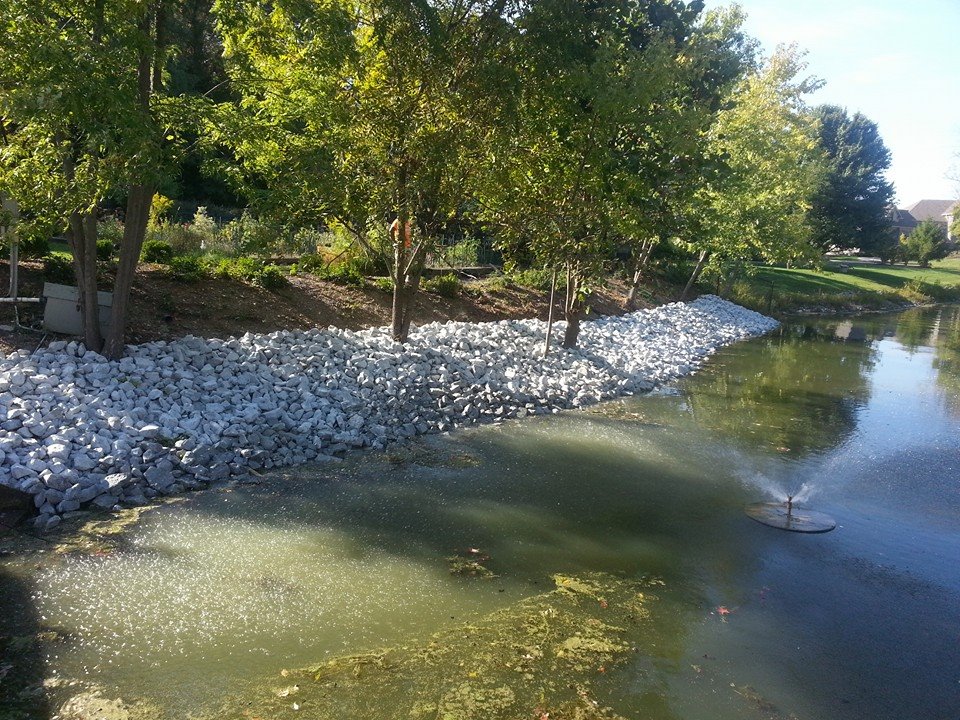
Riprap is a layer of loose rocks that is used to cover a shoreline and protect it from water erosion.  The rocks are typically a crushed granite material, varying in sizes. As waves come crashing in, slowly over time they will begin to erode the shoreline back and disturb it’s look. By covering a shoreline with riprap, it creates a natural look that prevents water from washing soil and sand away. The construction process begins by laying out a mesh layer of geotextile fabric to prevent soil from seeping back into the water. Then, the shoreline is covered with large rocks of crushed granite, typically supplied by your local quarry, to prevent the water from crashing into the soil. Overall, the installation process for riprap will not disturb the environment.

Geist Riprap

Why Do I Need RipRap?

While riprap is great for aesthetic reasons, it’s main use is to prevent water erosion.  There are many options for preventing water erosion, but riprap is the cheapest and most natural option. The biggest factor when determining if riprap is the right solution for your land is the slope and natural look. If your land isn’t too steep, such as a 2:1 slope where the land rises every 2 feet for every foot it goes back, or if you want to maintain the natural look of the terrain then riprap is the best option.

RipRap vs Seawall

The two choices that Deaton’s Waterfront Services offers for managing your shoreline are riprap and seawalls. Seawalls offer much more protection against shoreline erosion, but the construction method is also more intensive on the land. Heavy machinery such as an excavator are going to need to terraform your land into the right position then drive metal sheet panels into the ground. Seawalls are also more expensive than riprap due to the construction costs. If you’re looking for a budget method to protect your shoreline, riprap is the best way to go.

Deaton’s Waterfront Services has an expert coastal management team that ensures to protect shorelines from water erosion. We will come out and inspect your property to determine the best solution for you, free of charge. If you’re interested in protecting your investment from erosion, feel free to reach out to us or give our office a call at (317)747-4933.


Preparing your PWC for Winter

As the summer season starts to cool down, it also brings an end to boating season. Now it’s time to start planning on removing your watercrafts from the water. Every year, watercraft must undergo winterization to ensure they will be in the same condition they were left in for the next boating season. Without winterizing, water that remains inside the watercraft for cooling will freeze and expand, damaging the engine and other parts. So to protect your investment, the best course of action is to winterize.

How to Winterize Your PWC

Winterizing a smaller watercraft such as a jet ski is much easier than a larger boat. To winterize your jet ski, just follow these steps:

1. Drain all water.

As stated earlier, water will freeze and expand during the winter which can cause damage to your engine and other internal components. To drain all water out of a jet ski, tilt it up by using a boat ramp or jet ski lift. Start the engine for around 30 seconds, and rev the throttle periodically to shoot all water out. After no more water comes out, turn off the engine.

2. Clean your PWC.

Now is the time to scrub and clean the outside of our jet ski. Take some soap and water and clean the hull. After that, clean and wax the outer shell to keep it looking new and protect it from UV damage. Last, clean the bilge area of the jet ski to remove all grime and gunk.

3. Run Anti-Freeze through your system.

For colder climates such as here in Indiana, you’ll want to make sure any leftover moisture doesn’t expand and cause damage. Get some marine grade anti-freeze, either pre-mixed or concentrate that you mix yourself, and place a hose in the flush outlet. Turn the engine on and make sure the anti-freeze is cycled into your system until the mixture has passed through the exhaust.

4. Stabilize and fill your fuel.

You always want to store your jet ski with a full tank of fuel to prevent condensation. Start by adding a fuel stabilizer to your tank and running your engine in 30 second intervals. This gives your fuel a longer life, which prevents you from wasting a full tank of gas.

5. Lubricate all cables and connections.

Using a lubricant recommended by your PWC’s manufacturer, spray all cables and seals to prevent them from corroding.

6. Oil your PWC.

To further ensure that water and moisture won’t settle on your components, spray fogging oil on the carburetor and spark plug cylinders. You can access this by removing your air filter. Spray the fogging oil while your engine is turned on, and keep doing so until it stalls. Remove the spark plugs and spray fogging oil into each hole. You’ll want to cover the holes with a rag and turn on your engine to ensure the holes are properly lubricated. It’s normal for your engine not to start at this point. Don’t forget to replace your air filter and spark plugs once you are done.

7. Remove and safely store your battery.

Leaving the battery inside the PWC will usually result in a dead battery once spring rolls around. It’s recommended to remove your battery by disconnecting each terminal, and store it in an area that won’t go below freezing. It’s recommended to store your battery on a mat, rather than placing it directly on concrete.

8. Cover the exhaust to prevent critters.

As it starts to get colder, animals and insects are gonna look for a dry, safe space to stay. By covering your exhaust with steel wool or dryer sheets, you’ll remove their method of entry.

9. Cover and store your PWC.

The final step of the PWC winterization process is to cover the PWC with a tarp or jet ski cover. It’s recommended to store your PWC on a trailer for easy transportation. Don’t store your jet ski in your house, as it will emit deadly fumes since it still is full of gas.

PWC Winterization at Deaton’s

While Deaton’s Waterfront Services is currently not offering winterization services, we are planning on eventually offering once we have the space to store boats and trailers. We estimate this service to be ready for the 2021 season. If you have any questions or comments related to PWCs, or anything else, feel free to call our office at (317)747-4933, or you can request a quote here. Our team of experts will work with you to find the best solution that fits your needs.

The Top 5 Signs To Replace Your Dock

Replacing your dock is never an easy decision to come to. Hearing that your dock will need replaced is like giving it a death sentence. Everyone knows it is much cheaper to repair a dock rather than replace it. There are many cases where a dock can be repaired, but sometimes docks are simply too old and aren’t repairable. Fortunately, modern boat docks are built with the latest techniques to see that they’ll last for decades. Today, we’ll look at the symptoms that your dock isn’t repairable and will need replaced.

When Is It Time to Replace My Dock?

1. Rusted Frames/Supports

For metal docks such as floating or stationary, rust can be a big issue over time. Small holes and cracks in the frame can always be repaired, but when large portions start to rust and break it means there is not much life left. Supports such as pipe driven into the ground can also rust and give out over time, which is also fatal in stationary docks.

2. Warped Frames

Heavy waves and currents can create pressure that will twist and bend frames over time to cause a major warp. Collisions will also warp your frames, and can be caused by boat accidents or large pieces of debris. In cold-weather climates, stationary docks also face a problem with warping. As ice thaws, sometimes the land will shift causing the support beams driven into the ground to also move.

3. Rotten Wood

If your dock is constructed out of wood, once it starts to splinter and rot it is time to replace the dock. While docks with wood decking can simply replace the decking, docks built with wooden frames and supports suffer structure damage once they start to rot.

4. Refurbishing Too Costly

Once a dock gets so old that all the floats need replaced and the entire decking needs redone, it may be a better financial decision to simply replace the dock. While in the short term it may seem less costly, but at some point the frames will wear out which could be sooner than later. So it makes more sense in the long term to replace the dock and worry less about maintenance.

5. Foundation Damage

On fishing piers and boathouses that require a concrete foundation, it is important to regularly inspect the foundation for cracks and damage. Once the pilings start to give out, they are no longer safe to support the dock.

High Quality Docks From Deaton’s Waterfront Services

When the diagnosis has been made that it’s time to replace your dock, Deaton’s Waterfront Service’s has the team of experts that will gladly assist you in designing a high quality dock that perfectly fits your needs. Our docks are built to last using the latest marine construction techniques. If you are interested in replacing your dock, or need our experts to come out for an inspection feel free to contact us or give our office a call at (317) 747-4933.